
Minnesota Death Index
The Minnesota Death Index covers death records from 1870 to the present, held by the Minnesota Department of Health and county vital records offices across all 87 counties. You can search the index online to verify a death, look up a certificate number, or find the county where a death occurred. For certified copies of a death certificate, requests go to MDH or the county office where the death took place. This guide explains where to search, how to order records, who qualifies, and what to expect at each step.
Minnesota Death Index Overview
Where to Search the Minnesota Death Index
The Minnesota Department of Health (MDH), Office of Vital Records is the main state agency for death records. MDH holds certified death certificates from 1908 forward and maintains the statewide electronic death registration system that launched in 1997. Their mailing address is P.O. Box 64882, St. Paul, MN 55164-0882 and you can reach them at 651-201-5970. For deaths from 1997 to the present, MDH runs a free online tool called Verify a Death. It lets you search by name and confirm that a death record exists in the system. It shows the name, date of death, county, and certificate number but does not provide the full certificate.
The Minnesota Historical Society (MNHS) holds death records from 1904 through 2001 in its Minnesota People Records Search. The MNHS system is a major research tool for genealogists and anyone looking for historical death data. You can search by name and see the date of death, county, and certificate number. For records from 1904 to 1907, these are death cards compiled by MDH rather than official certificates. From 1908 to 2001, the records are death certificates available on microfilm at the Gale Family Library in St. Paul. Non-certified copies from MNHS cost $9 per record. In-person microfilm viewing is free.
County vital records offices are a third option. Every Minnesota county keeps death records for deaths that occurred in that county. Since 2001, all 87 counties have been linked through the statewide electronic system. This means that for deaths from 1997 onward, you can walk into any county office and request the record regardless of which county the person died in. For deaths before 1997, you need to contact the county where the death occurred or go through MDH.
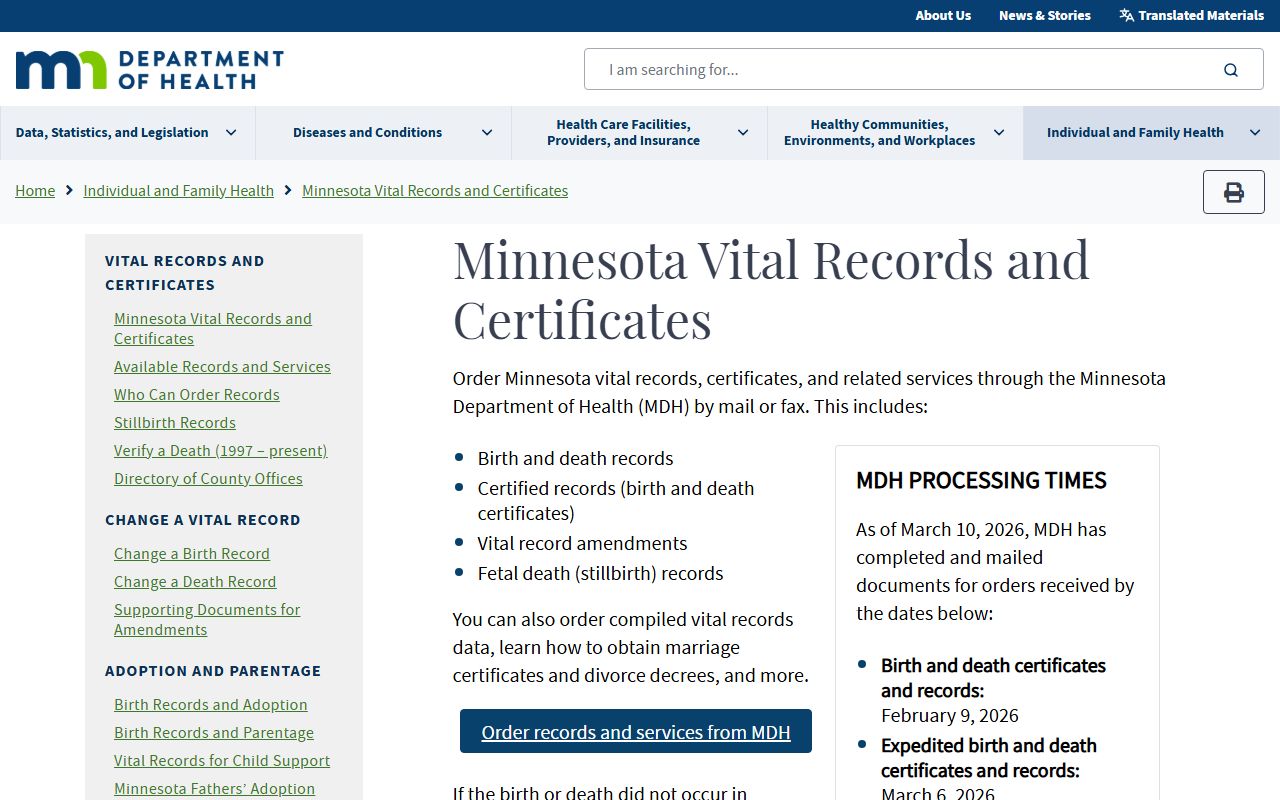
The MDH vital records page at health.state.mn.us covers ordering options, fee schedules, and application requirements for Minnesota death certificates.
Online Death Index Search Tools in Minnesota
Minnesota offers two primary online tools for searching death records. The first is the MDH Verify a Death search tool, which covers deaths registered in Minnesota from 1997 to the present. You can search at health.state.mn.us/people/vitalrecords/deathsearch. The search returns the person's name, date of death, county of death, and death certificate number. This is free and open to the public. You do not need to create an account or prove eligibility. The tool is useful for confirming a death took place or finding the certificate number before submitting a records request.
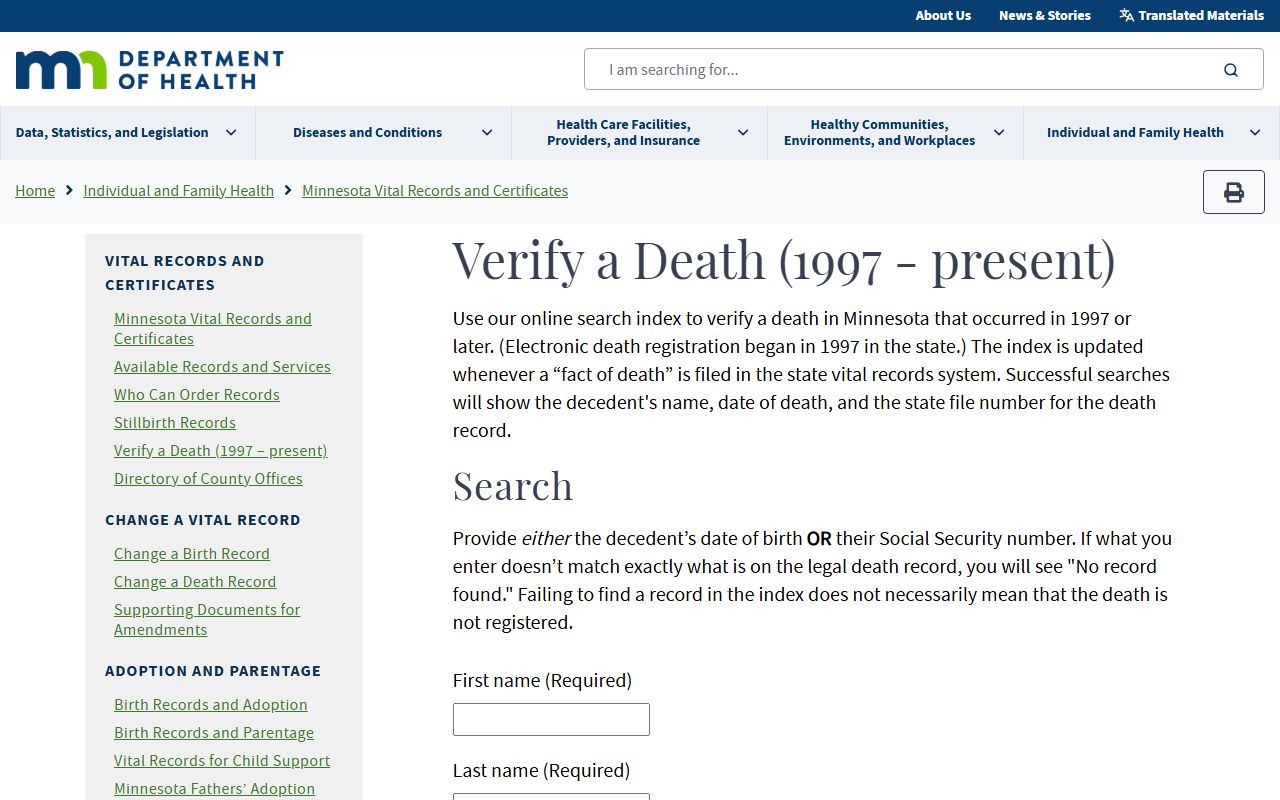
The Verify a Death search at MDH covers deaths registered in Minnesota from 1997 to the present and returns name, date, county, and certificate number at no charge.
The second tool is the Minnesota People Records Search at the Minnesota Historical Society. This database indexes death records from 1904 through 2001. The MNHS system is more useful for older records and genealogy research. Records from 1955 to 2001 often include birthdate, birthplace, and mother's maiden name along with death details. For records from 1904 to 1954, index information may be more limited. MNHS also holds early death records from Minneapolis (1886 to 1915) and records from Minnesota Soldiers Home (1888 to 1987).
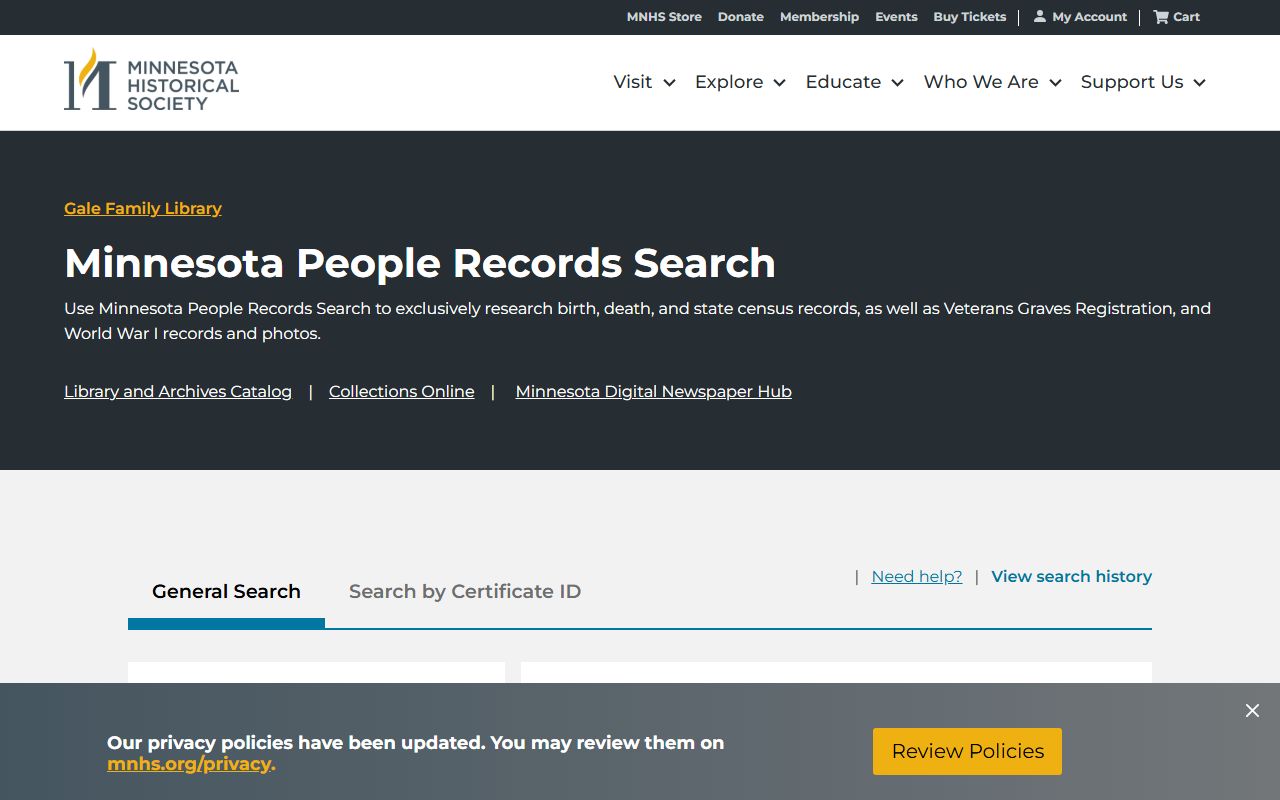
The MNHS death records help page explains what the index contains, how to interpret results, and how to order non-certified copies from the Gale Family Library in St. Paul.
Types of Minnesota Death Index Records
Minnesota has four main categories of death records depending on when the death occurred. Death cards from 1904 to 1907 are transcripts compiled by MDH and are not official certificates. Death certificates from 1908 to 2001 are official records available through MNHS on microfilm and through MDH as paper copies. Electronic death records from 1997 to the present are in the statewide system and can be issued by MDH or any county office. For deaths before 1904, records exist only at the county level where the death occurred, and coverage varies by county.
Each death certificate in the index records the full name of the deceased, date of death, county of death, and the certificate number. Certificates from 1955 onward often include additional data like birthdate, birthplace, and the mother's maiden name. More recent certificates include the cause of death, informant name, and the funeral home.
Minnesota issues two types of certified death certificates. The first includes cause of death information. The second is a certified certificate without cause of death, which is only available for deaths registered from 1997 forward. Veterans and their surviving spouses can request a certified VA death certificate at no charge by including a VA Claim Form with their application.
Note: Non-certified copies are open to anyone for informational purposes. Certified copies require proof of tangible interest under Minnesota Statute 144.225.
How to Order a Minnesota Death Certificate
MDH accepts death certificate applications by mail, fax, and at some county offices in person. The MDH available records page lists all fees and service options. Mail applications must be signed in front of a notary public. In-person applicants at county offices do not need notarization. The standard application asks for the full name of the deceased, date of death, date of birth or age at death, city and county where the death occurred, and the names of the deceased's parents and spouse if applicable.
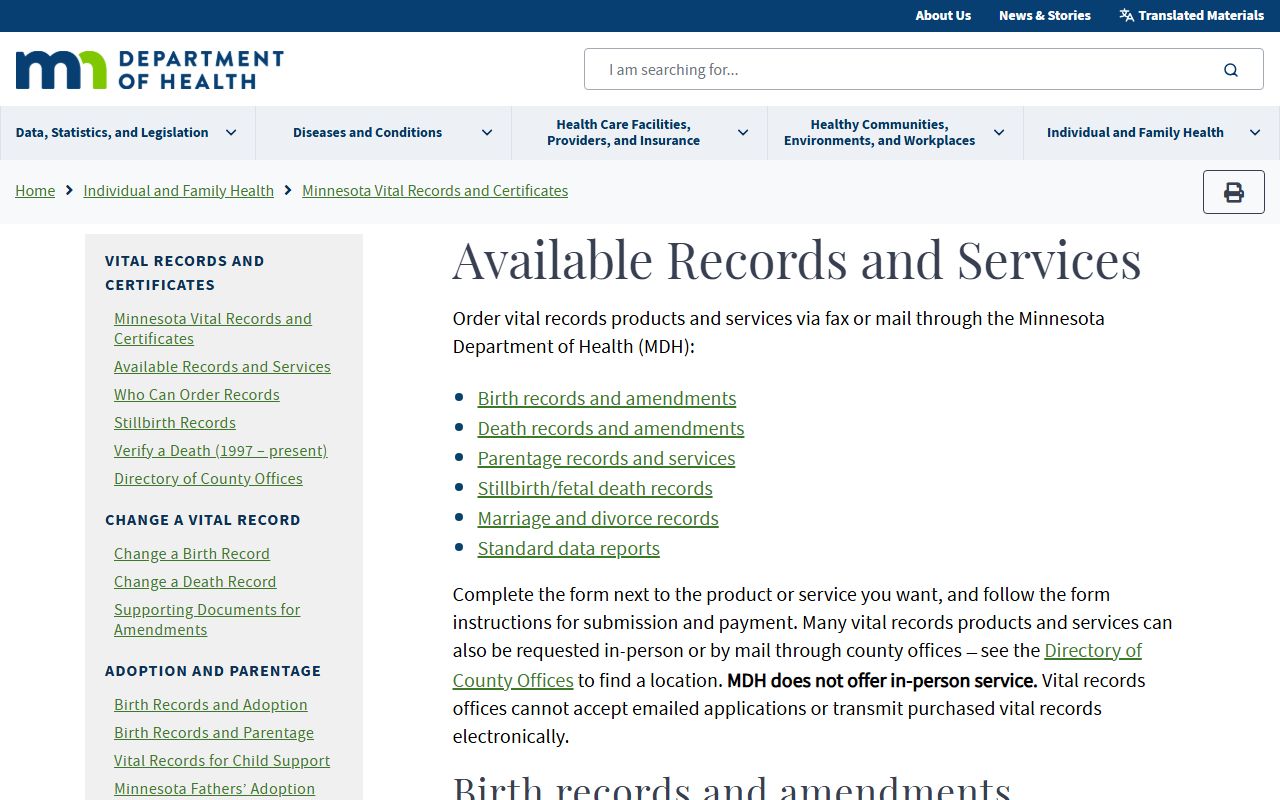
MDH publishes a complete fee schedule and records availability table showing what records exist, what they cost, and how to request them for both standard and expedited service.
Processing times at MDH as of early 2026 are several weeks for standard orders. Faster processing costs $20 extra and moves your order ahead of standard requests. UPS delivery adds $16 for domestic shipping. International orders require a prepaid UPS envelope. Fees are non-refundable even if no record is found. If MDH cannot locate the record, they issue a certified Statement of No Record Found.
Many counties also accept death certificate requests directly. Hennepin County accepts applications by mail, fax ($9.50 extra), drop-off, and in person at the Government Center at 300 S 6th St, Minneapolis. Ramsey County handles requests at the Plato Building, 90 Plato Blvd West, Saint Paul. Dakota County has six service locations throughout the county. Washington County has three locations including the Government Center in Stillwater and Public Health offices in Cottage Grove and Forest Lake.
Minnesota Death Record Fees
The standard fee for a certified death certificate in Minnesota is $13 for the first copy. Each additional certified copy ordered at the same time costs $6. Non-certified (informational) copies also cost $13. VA death certificates for veterans or their surviving spouses are free when accompanied by a VA Claim Form. Amendment requests and delayed registration both cost $40.
Payment options at MDH include credit cards (Visa, MasterCard, Discover) and checks or money orders payable to the Minnesota Department of Health. County offices may vary. Hennepin County accepts credit cards in person and checks payable to Hennepin County Treasurer. Olmsted County charges a 2.15% credit card convenience fee. Lake County accepts only cash or check payable to Lake County Vitals and does not accept debit or credit cards.
MNHS charges $9 for non-certified copies from their collection. In-person microfilm viewing at the Gale Family Library is free. Standard data reports from MDH cost $15.
Who Can Request Minnesota Death Records
Non-certified copies are available to anyone. Certified copies require what Minnesota law calls "tangible interest." The MDH tangible interest page lists 17 categories of eligible requesters. These include children of the subject, parents named on the record, siblings, spouses on record, grandparents, grandchildren, personal representatives of the estate, successors, trustees of a trust, and attorneys representing any of the above. Government agencies may also request records for official duties. People with a valid court order can obtain records regardless of relationship.
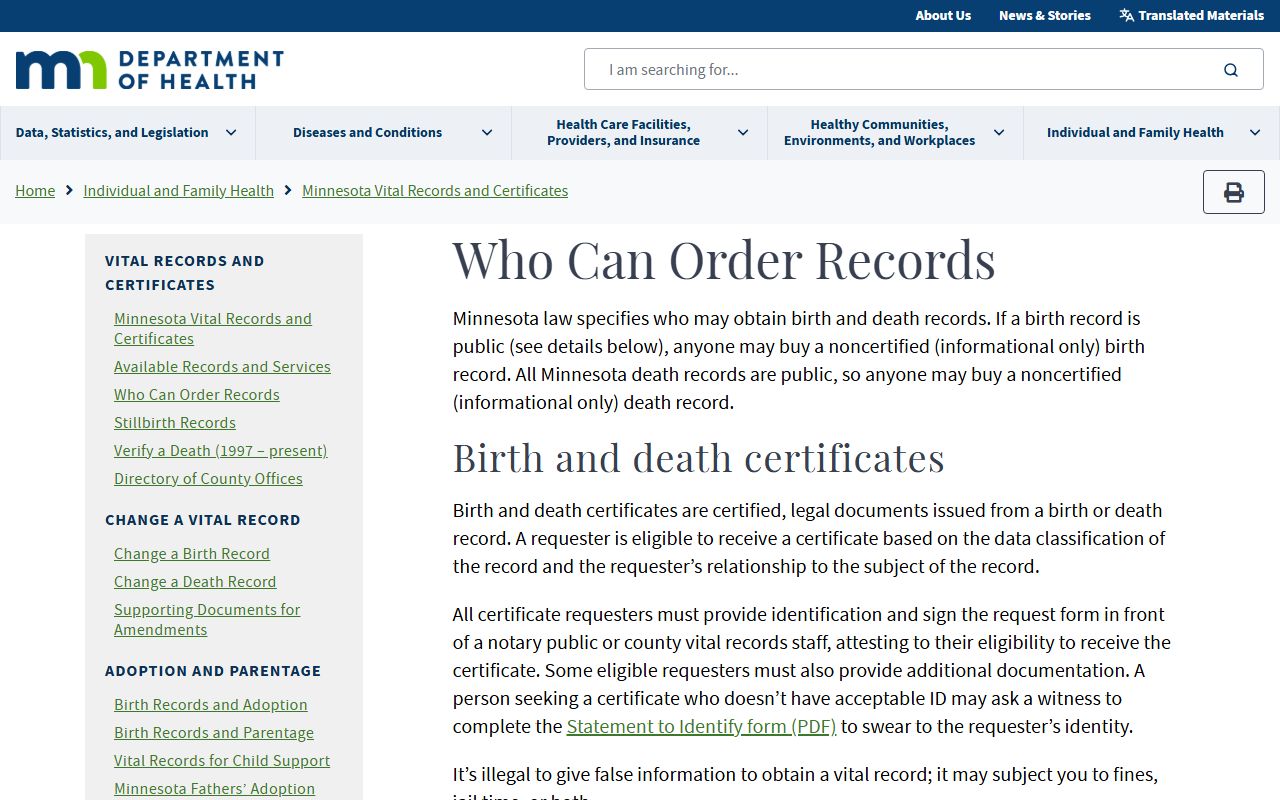
The MDH eligibility page details all 17 categories of requesters who qualify for certified death records and what documentation each category must provide with their application.
For in-person requests, valid ID is required and you sign in front of county staff. For mail or fax requests, the application must be notarized. E-notarization is acceptable at Hennepin County. False information on an application is illegal under Minnesota Statute 144.225 and Statute 144.221 and can result in fines or criminal charges.
Minnesota Death Record Laws
Death registration in Minnesota is governed by Minnesota Statute 144.221. Under this law, a death record must be filed within five days of death and before final disposition of the body. The commissioner of health sets the rules for how records are created and filed. When no body is found, a death record requires a court adjudication before it can be registered.
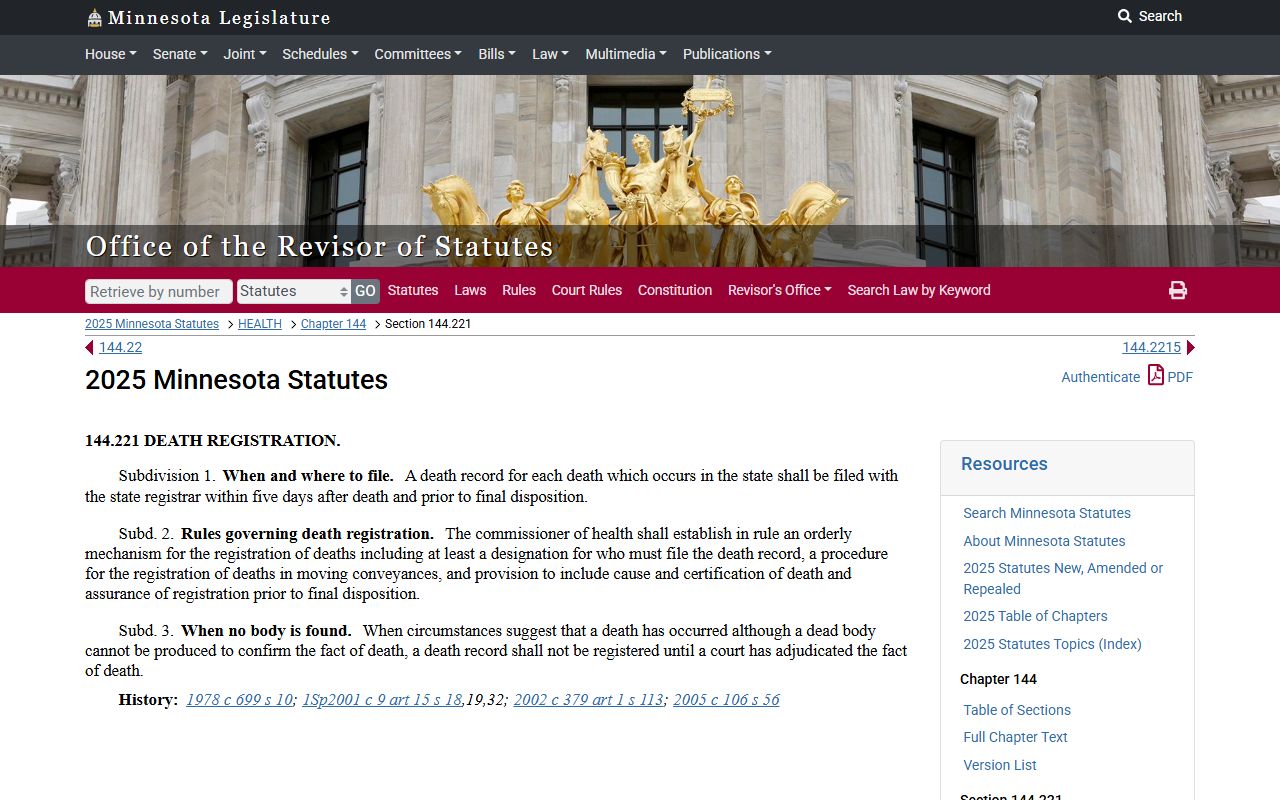
MN Statute 144.221 sets the five-day filing requirement and establishes the commissioner's authority over death registration rules statewide.
Access to vital records is controlled by Minnesota Statute 144.225. Subdivision 1 of this statute states that information in vital records is public information with specific exceptions. Subdivision 7 defines the 17 categories of people who can obtain certified birth or death records. This is the primary law governing who can get what from the Minnesota death index.
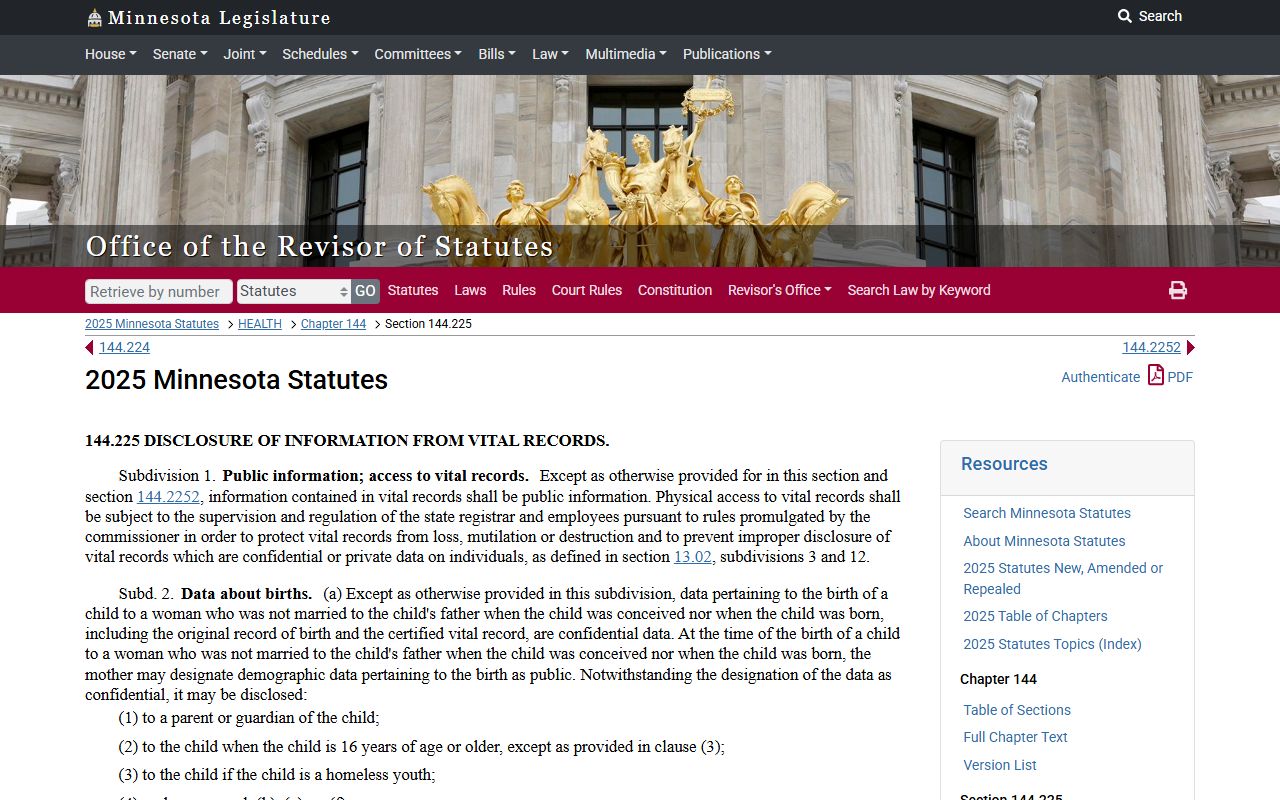
MN Statute 144.225 governs disclosure of vital record information and defines tangible interest eligibility for certified copies of death records.
Minnesota Statute 13.10 covers data on decedents. Under this law, private or confidential data about a person becomes private data on decedents when they die. The data becomes public when 10 years have passed since the death and 30 years have passed since the data was created. Representatives of the deceased can exercise data rights during the non-public period. For suspicious or unattended deaths, Statute 390.23 gives the county coroner or medical examiner sole authority to file or amend the cause of death on the death certificate.
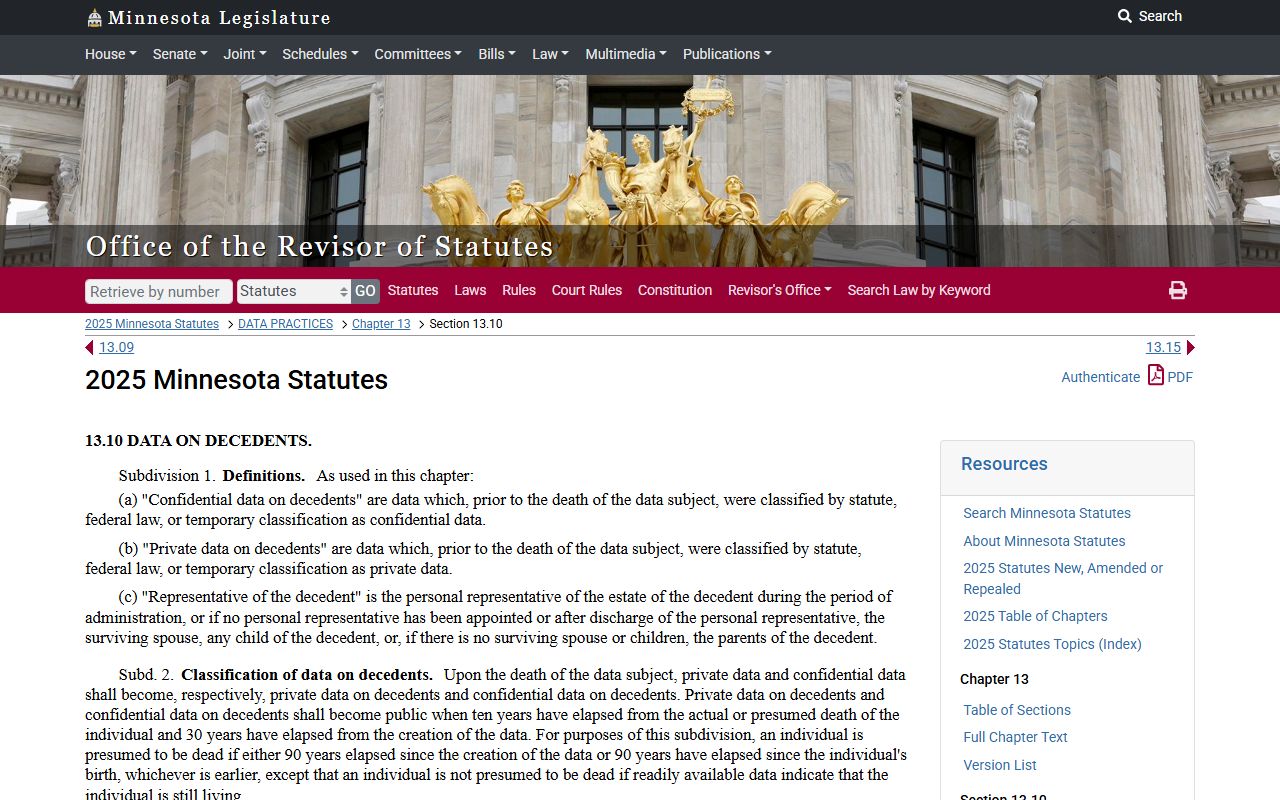
MN Statute 13.10 establishes when data about deceased individuals becomes public and what rights the decedent's representatives retain during the waiting period.
Historical Minnesota Death Records
Minnesota law required recording of deaths beginning in 1870, though compliance was inconsistent in the early years. MDH compiled death cards from 1904 to 1907 as transcripts from earlier sources. Formal state death registration began in 1908. From that year forward, official death certificates were filed and are now available through MNHS or MDH depending on the year.
For deaths before 1904, records exist primarily at the county level. Coverage depends on when and how well each county maintained its records. Some counties like Redwood began recording vital events as early as 1864. Counties formed later, such as Lake of the Woods (formed in 1922 from Beltrami County), may have early records filed under the parent county. MNHS holds records from many counties in microfilm format and can help with pre-1908 research requests.
The MNHS Gale Family Library in St. Paul at 345 W. Kellogg Blvd. is the main research facility for historical Minnesota death records. Staff can assist with searches and provide access to microfilm. The library's death records research guide explains what is available for each time period and how to interpret index entries. MNHS also holds Minneapolis city death records from 1886 to 1915 with an index covering 1870 to 1959, and Minnesota Soldiers Home death records from 1888 to 1987.
Browse Minnesota Death Index by County
Each of Minnesota's 87 counties maintains death records for deaths that occurred there. Select a county to find local vital records office contact info, addresses, fees, and how to request death records in that county.
View All 87 Minnesota Counties
Minnesota Death Index by City
Minnesota cities do not maintain separate death records. Records are kept at the county level. Find the county office that serves your city and learn how to request death records for residents of each major Minnesota city.